In Uttar Pradesh, ‘Kathas’ Of Two Parties In The Race For Elections
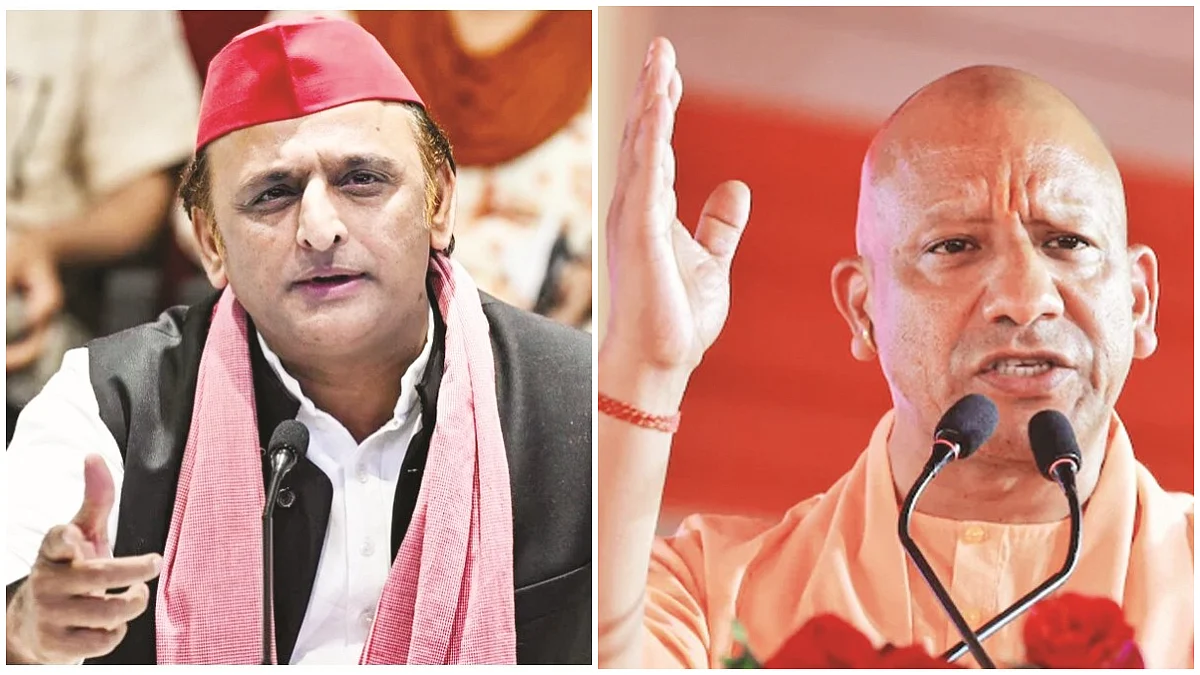
In election season, politicians turn faith into spectacle, but rarely on the scale that is currently being witnessed in Uttar Pradesh. Prominent leaders on both sides of the divide are organising religious events with the unstated aim of mobilising votes. The fortuitous release of ‘Ramayana: Rise of a Legend’ serves to amplify the phenomenon.
The religious discourses or ‘kathas’—multi-day events marked by bhandaras or public feasts—draw vast crowds and create a narrative in favour of the leader. Both the gods and voters are propitiated, and the electorate is suitably impressed with the candidate’s religious zeal and generosity. The bigger the kathakar, or kathavachak (literally, the storyteller), the larger the crowd. In the past couple of months, stellar names such as Bageshwar Dham head Dhirendra Krishna Shastri, Pradeep Mishra ‘Sehore wale’, Shantanu Maharaj, the saint-scholar Jagadguru Rambhadracharya, spiritual leader Riteshwar Maharaj, and Jagadguru Raghavacharya have headlined religious discourses across the state.
Caste Competition Shapes Religious Mobilisation
However, politicians have learnt that religious mobilisation does not work where there is caste competition or a strong counter-narrative. In the 2024 Lok Sabha polls, the Samajwadi Party’s PDA (Pichhda-Dalit-Alpsankhyak) campaign successfully overshadowed the BJP’s Ram Mandir plank by claiming a plot to eliminate reservations for backward castes and Dalits. The narrative caught on and attenuated the BJP’s OBC and Dalit votes. When the alarmist allegations proved unfounded, the PDA dynamic failed, and the NDA ended up winning eight of ten assembly bye-elections, a net gain of four seats.
Accordingly, BJP leaders are focusing on caste consolidation. In this context, the Ramkatha organised by seven-term MLA Raghuraj ‘Raja Bhaiya’ Pratap Singh, the strongman of Pratapgarh district in southeastern UP, bears mention. The event brought together politicians representing various castes—OBC, Jat, baniya, brahmin and thakur—on the same dais, among them both the deputy CMs of UP. It was also graced by yoga guru Baba Ramdev (a Yadav).
The headliner was Dhirendra Shastri, who made a strong pitch for Hindu consolidation across caste lines. He also ensured that 21 sanitation workers (predominantly from the Scheduled Castes) not only occupied pride of place on the dais but led the religious rituals. The politicians quietly lined up behind them.
The event became a talking point, not the least because Shastri’s gratuitous reference to Lord Krishna’s ‘tribhanga’ pose had previously sparked a political controversy. The gaffe had little to do with the spiritual symbolism of the classic tri-bent posture and everything to do with identity politics (because Yadavs claim descent from Lord Krishna). It led to a much-publicised interplay between Baba Ramdev and Shastri, with the former alternately scolding and embracing the latter.
Publicity is gold for politicians, but other than that, what’s in it for Raja Bhaiya? As an independent MLA, he has served as a minister in both BJP and SP cabinets and currently represents his self-founded party, the Jansatta Dal. The answer may lie in the posters held up by devotees on the third day of the event, depicting UP Chief Minister Yogi Adityanath as prime minister and Raja Bhaiya as chief minister!
Samajwadi Party Leaders Court Religious Events
Nor has SP chief Akhilesh Pratap Yadav—depicted as Lord Krishna in posters earlier this year, complete with blue skin, yellow garments, flute, and a peacock feather—failed to pay his respects to deities. He attended a Bhagwat Katha in Ayodhya, organised by SP leader Pawan Pandey, who announced that Yadav would make his first visit to the Ram Mandir on an astrologically auspicious date in December. Former SP MLA Manoj Kumar Singh is reportedly holding a seven-day Bhagwat Katha this fortnight, with arrangements in place for an expected one lakh visitors, while an SP youth leader recently organised a havan in honour of Yadav in Lucknow. For good measure, Yadav has inducted five brothers bearing the names of different Hindu deities into the party.
Religious Outreach Across States
The performative religion phenomenon is by no means restricted to UP. Celebration of festivals with elaborate public functions is encouraged and financed by politicians in most states, especially in election years. Funds for pandals, mahaprasads, publicity, parades, and cash prizes flow freely from the pockets of politicians, who receive endorsements in return. The youth organisations that manage these events become a readymade corps of campaigners. The Ganeshotsav mandals in Maharashtra, for instance, have long been a training ground for young political aspirants.
In election-bound Punjab, the Deras, spiritual centres, mediate between candidates and society. The supreme head of the Radhasoami Satsang Beas, reverentially called ‘Babaji’, is being courted by one and all. Haryana CM Nayab Singh Saini, who is campaigning in Punjab, was the first to be honoured by a visit from the Dera chief, followed by Punjab PCC president Pargat Singh. With an eye on Scheduled Caste communities, both Pargat Singh and BJP president Nitin Nabin paid obeisance to Sant Nirajan Dass, head of the Dera Sachkhand Ballan, spiritual fount of the Ravidassias. AAP had already stolen a march, with the saint making a rare visit to a private residence, that of a chief ministerial aide. Meanwhile, the jailed head of Dera Sacha Sauda, which commands a vast following in Punjab, is likely to receive parole ahead of the elections.
Coming to the ‘Devbhoomi’ of Uttarakhand, which also goes to polls in February 2027, religious events are a year-round affair. Beleaguered CM Pushkar Singh Dhami’s pitch to voters is his ‘Hindutva’ commitment—the Uniform Civil Code, bringing minority educational institutions under the state board, acting against the ‘land jihad’, but most visibly, creation of religious tourism infrastructure. He proudly announced that spiritual pilgrimages to the state had touched an all-time high.
Voters have now come to expect overt displays of religiosity from political leaders. But beyond community engagement through public celebrations of faith, many politicians commune privately with deities. Temple runs, quiet visits to gurus, astrological readings, and yagyas are at par for the course before elections.
Bhavdeep Kang is a senior journalist with 35 years of experience in working with major newspapers and magazines. She is now an independent writer and author.
Level up your brain the fun way. Play daily games and quizzes on FPJ Smart!
To get details on exclusive and budget-friendly property deals in Mumbai & surrounding regions, do visit: https://budgetproperties.in/
This content is published by Free Press Journal and has not been created or edited by Hello Headlines. View original