
Why storytelling can be a startup's strongest competitive moat
Technology, capital, and talent can help startups build and scale their businesses. But as competitors gain access to similar resources, founders also need to explain what makes their companies different.
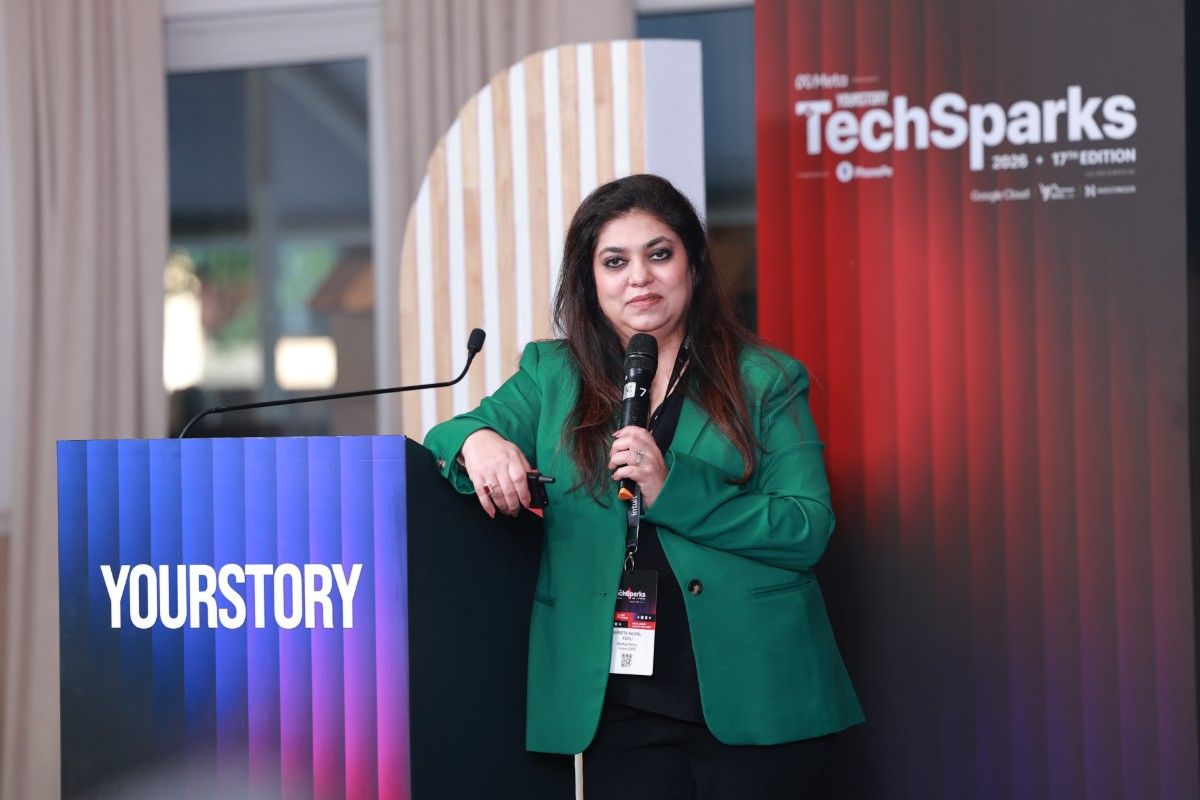
At TechSparks 2026, Shweta Rajpal Kohli, President and CEO of Startup Policy Forum, spoke about the role of storytelling in building a business.
Leading a masterclass titled ‘Startups and Storytelling: Making Narrative Your Moat’, Kohli said founders often treat storytelling as something to consider after developing their products. However, before achieving product-market fit, their story is often what they are selling.
“Every startup is a story no one believes in yet,” she said.
The ‘why’ behind the business
Kohli began by asking the audience why storytelling matters. Participants spoke about building trust, creating personal connections, and differentiating a business.
She then used her own career to demonstrate what founders often leave out of their stories.
After summarizing nearly 28 years of work in a few minutes, she asked the audience what was missing. It was the reason behind her decision to establish Startup Policy Forum.
While she had explained how founders approached her to work with them, she had not mentioned the gap she had identified: India lacked an institution to represent the startup ecosystem’s policy concerns to the government.
Kohli said a mission alone does not make a startup distinctive because competitors may have similar goals.
Founders must also explain why them—what makes them suited to building the business—and why now—what makes the timing relevant.
Their passion and the community supporting their work also help make the story harder to replicate, she said.
Why details matter
Kohli said people tend to remember stories more easily than statistics. Instead of simply presenting market-size figures, founders should explain how their products could change someone's life.
She encouraged them to use techniques learned in school English classes, including anecdotes, sensory details, drama and emotion.
Drawing on her own experiences, Kohli described how Startup Policy Forum's logo came about.
An early backer had dismissed her initial designs as “tacky”. The eventual idea came to her while watching her son play with a Rubik's Cube.
She also recalled how a chance meeting with a member at an airport became a social media post that gained traction. On another occasion, a session she attended at an awards evening reminded her of how the forum got its name and prompted a LinkedIn post.
Her point was that founders need not wait for major milestones to find stories worth sharing.
She advised them to document the early stages of their businesses, from the first garage office and notebooks to whiteboards and the arrival of their first employee.
For founders who struggle to write, Kohli suggested talking through their experiences with a friend, recording the conversation using an AI voice tool and turning the transcript into a post.
“You'll realize that you've actually said it well,” she said.
Using AI without losing authenticity
Kohli said AI has made storytelling easier, but it has also made it harder to stand out.
Generic stories can now be produced in seconds, and readers can often recognize content that does not reflect a founder's own experience.
She encouraged founders to use AI to improve their language, but not to generate facts or experiences.
“You can write stories; you can't cook them,” she said.
Referring to her own experience with the Rubik's Cube, Kohli said AI could help present the incident more clearly, but should not add details that never happened.
She also stressed the importance of consistency. Founders may speak to investors, customers, the media, and government representatives, but the underlying story should remain the same. Changing it to suit different audiences can affect credibility.
Knowing when to tell the story
The masterclass also addressed how often founders should communicate and when their public presence could become a distraction.
Kohli said storytelling should accompany meaningful business developments, such as a new feature, product launch, or milestone.
However, founders must balance the time spent communicating with the time needed to build their businesses.
She also cautioned that a founder’s public presence could become a liability if not managed carefully.
While formats and audiences may change, Kohli said the facts behind a founder’s story must remain consistent.
Storytelling can help startups attract attention, build trust, and connect with their audiences. But those stories need to be based on real experiences rather than manufactured narratives.
Edited by Teja Lele
This content is published by YourStory and has not been created or edited by Hello Headlines. View original