'Bibi, Cow Or Goat' Instead Of Their Names: How Taliban Is Erasing Afghan Women's Identity, One Decree At A Time
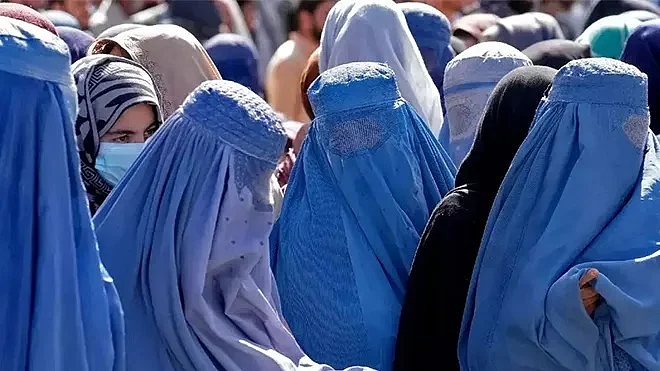
In Afghanistan, a woman's name is becoming something she may no longer be allowed to use. In a fresh move targeting women's identity, Taliban authorities in the northern province of Balkh have reportedly banned the use of women's names in official documents, including medical prescriptions and hospital records.
According to an investigation by Afghan media outlet Zan Times and British newspaper The Guardian, healthcare workers and other public employees have been instructed to address women as 'Bibi', a term commonly used to mean 'Granny' or 'old woman'.
What may appear to be a change in how women are addressed is being viewed by activists as another attempt to erase their individual identities.
From Names To Numbers: The Erasure Of Women's Identity
Germany-based Afghan activist Lalah Osmany says the reality is even more disturbing. Women are reportedly being addressed not just as 'Bibi' but, in some instances, through degrading terms associated with animals such as goats and cows.
NEW: The Taliban is reportedly stripping women of their names and replacing them with “Bibi”, a term that means “grandmother” or “goat”
— Politics Global (@PolitlcsGlobal) November 27, 2026
Osmany describes the practice as a systematic process of dehumanisation, arguing that taking away a woman's name strips her of her identity and reduces her to someone else's property.
In Afghanistan, women have traditionally been identified in official records as someone's wife or daughter rather than by their own names. Their names are also frequently absent from tombstones, reflecting how deeply this erasure is embedded in society.
A Local Ban That Could Become A National Rule
Although the reported order currently concerns Balkh province, activists fear it could eventually be extended across Afghanistan. Zubaida Akbar, director of the Afghanistan programme at US-based NGO Femena, warns that local restrictions have previously paved the way for nationwide prohibitions.
After stripping women of their freedom and education, the Taliban are ordering the removal of their names from medical records in Balkh province. Women must be called “Bibi” (grandmother), while activists report degrading references to them as “goats” or “cows”. This is… pic.twitter.com/JHYY9MFbtb
— European Democrats (@democrats_eu) November 26, 2026
Afghan women have literally lost all their rights. What’s even left for them now?
— Chulbuli (@BetiGoneBad) November 27, 2026
So, the Taliban has banned women’s name in any official documents… every woman is now “Bibi” (means grandma), “goat” or “cow”
These men are so scared of women that now they are erasing them. pic.twitter.com/J8hOgAYNUy
The reported move comes amid more than 144 decrees restricting women's rights, according to Femena. These include barring girls from education beyond the age of 12, excluding women from most jobs and prohibiting them from speaking in public spaces.
When A Woman's Name Becomes An Act Of Resistance
Beyond the symbolic loss, the order could have serious consequences. Osmany warns that recording multiple patients under the same name could create confusion in hospitals, increasing the risk of medical errors. This is particularly concerning as women face growing restrictions on accessing healthcare.
For Osmany, a name represents a person's face, voice and story. Without it, a woman risks being erased not just from public life but also from records and history.
In a country where even calling a woman by her real name can be considered an affront to family honour, reclaiming that name has become an act of resistance.
This content is published by Free Press Journal and has not been created or edited by Hello Headlines. View original