Hyderabad scientists find key protein switch to repair spinal cord injuries
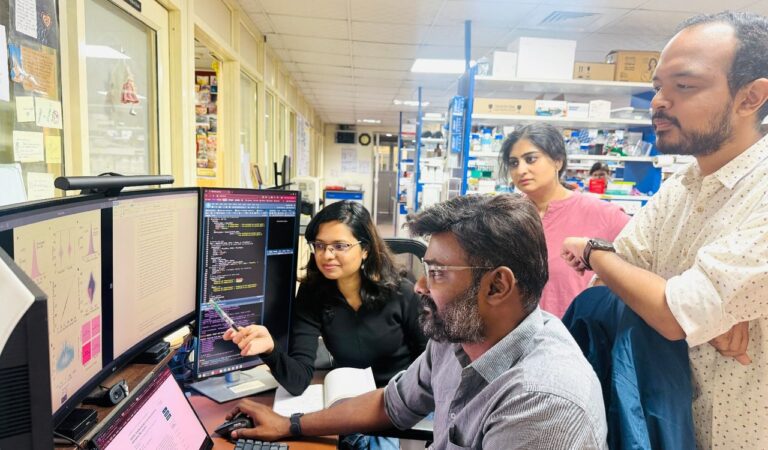
Hyderabad: Scientists at the Hyderabad-based Centre for Cellular and Molecular Biology (CCMB) have found how a protein unlocks hidden repair switches in adult nerve cells, offering potential for future treatments for permanent paralysis caused by brain and spinal cord injuries.
Fish and frogs can regrow damaged nerves throughout their lives, while humans and other mammals lose this ability as they grow older. As a result, serious spinal cord or brain injuries in adults often cause lifelong disability.
Adult nerve cells still carry the genetic instructions needed to regrow, but these instructions become tightly packed around tiny protein spools called nucleosomes as people age, the researchers said.
Led by Ishwariya Venkatesh, the CCMB team studied spinal cord nerve cells in mice to examine how a protein called PATZ1, which is plentiful in young nerve cells but declines in adults, helps restart nerve repair.
The study, published in the journal Communications Biology, showed that PATZ1 acts like an unpacker, clearing the tight packaging so dormant repair genes can be read again.
"We mapped the nucleosomes in a cell’s DNA and found that PATZ1 actively removes nucleosomes from regions that control regeneration-associated genes. Thus, the adult neurons silently retain the possibility of regrowth and can be reversed to a growth-competent state by manipulating PATZ1," Venkatesh said.
The researchers said that while PATZ1 prepares the ground for nerve repair, it cannot trigger regrowth alone and would need to be combined with other growth-boosting therapies to work effectively.
This content is published by Telangana Today and has not been created or edited by Hello Headlines. View original