
Jensen Huang To Bill Gates: Tech CEOs Whose Extramarital Affairs Sparked Scandals & Resignations
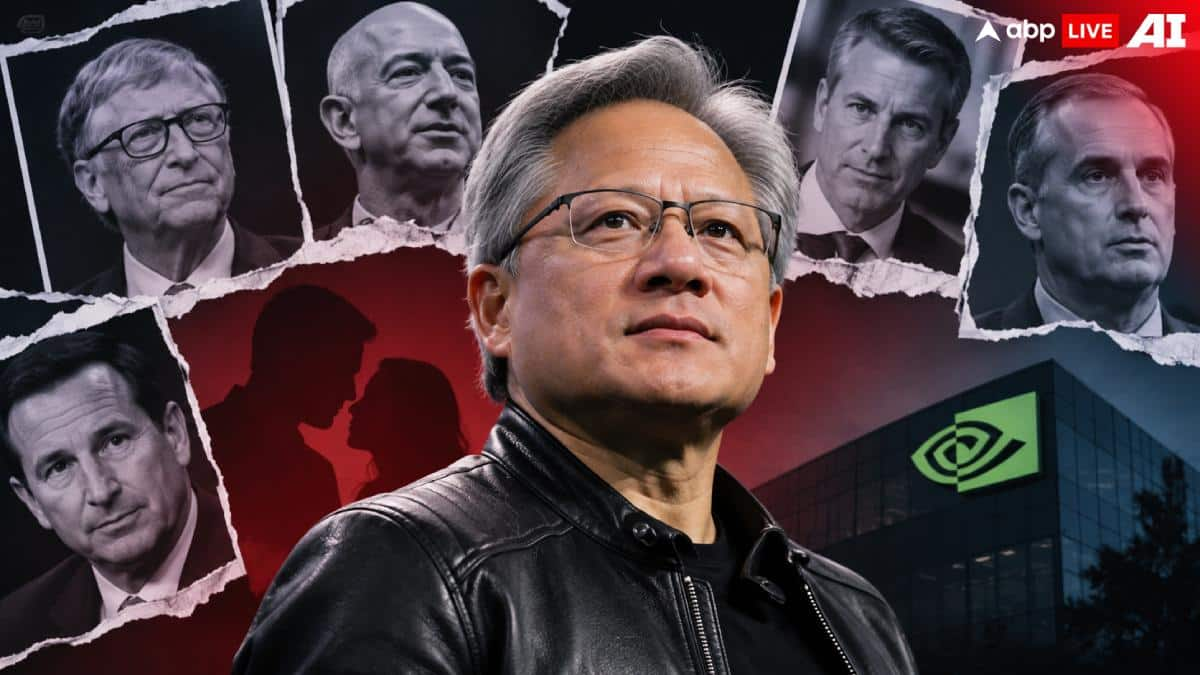
Nvidia CEO Jensen Huang's admission of infidelity has placed one of Silicon Valley's most influential executives at the centre of a controversy that extends well beyond his marriage. The billionaire chipmaker's chief executive has acknowledged being unfaithful to his wife, while Nvidia's board has launched an independent investigation into reports that he may have been targeted by a Chinese intelligence operation.
The developments have raised questions about corporate governance, national security and the potential consequences for Nvidia, whose artificial intelligence chips have become central to the global AI boom.
However, Huang is hardly the first prominent technology executive to face scrutiny over a personal relationship. From Microsoft co-founder Bill Gates to former Intel CEO Brian Krzanich and Astronomer's Andy Byron, several high-profile corporate leaders have found their private relationships becoming matters of public controversy, sometimes resulting in investigations, abrupt resignations and reputational damage.
The circumstances differ significantly. Some executives acknowledged extramarital affairs, others were investigated for relationships with employees that breached corporate policies, while certain widely publicised incidents never resulted in a confirmed finding of marital infidelity.
ALSO READ: Trump Reacts To Huang's Extramarital Affair
Jensen Huang: An Extramarital Affair And Allegations Of Chinese Espionage
Photos said to be shared by Alice Huang (Huang Le) from her own WeChat feed - almost like she was showing off and wanted people to know that she had special relationship with Jensen. Shouldn’t a spy be more low-key and cautious than this? https://t.co/LtvRwBAjVM
— Vivi (@vivilinsv) November 9, 2026
Nvidia co-founder and CEO Jensen Huang acknowledged being unfaithful to his wife in a message circulated to employees on November 8.
"I was unfaithful to my wife. My actions hurt her and our children. There is no excuse for what I did. I am deeply sorry," Huang wrote in the company-wide communication.
The admission followed reports concerning his relationship with Alice Huang, a former executive at Singapore-based data centre company Megaspeed, which has purchased Nvidia's AI chips.
According to reporting by The New York Times and Financial Times, US intelligence officials suspected that Alice Huang had been recruited by China's Ministry of State Security to gather information about Nvidia and potentially influence matters involving American AI technology.
The allegations remain unproven publicly. Huang's admission of infidelity does not independently establish the espionage allegations or prove that confidential information was shared.
Reuters reported on November 8 that Nvidia's board had initiated an independent investigation into whether its chief executive had been targeted by a foreign intelligence effort. Independent directors and outside legal counsel are overseeing the inquiry.
Nvidia has said it has no reason to believe that company secrets or US national security have been compromised. Huang has pledged to cooperate with the investigation and remains in his position as chief executive.
Could Jensen Huang's Affair Affect Nvidia's Business And Share Price?
The biggest concern for Nvidia is not simply the revelation of an extramarital relationship. It is the possibility that the company's chief executive could have been exposed to a foreign intelligence operation at a time when advanced AI chips are at the centre of technological competition between Washington and Beijing.
Megaspeed has already attracted scrutiny from US authorities over concerns that its operations could facilitate Chinese access to advanced computing technology subject to American export restrictions.
These circumstances could expose Nvidia to increased attention from regulators and lawmakers, particularly if investigators uncover evidence of undisclosed commercial relationships, inappropriate information sharing or attempts to influence policy.
Huang's unusually prominent role in Nvidia's growth also makes the situation significant for investors. As co-founder and longtime chief executive, he has become closely associated with the company's technology strategy, commercial relationships and position in the global AI market.
Reuters reported that analysts were concerned uncertainty surrounding Huang's leadership could weigh on investor confidence, particularly amid existing questions about the sustainability of AI infrastructure spending.
However, there is an important distinction between potential risk and established wrongdoing. Nvidia has not announced Huang's departure, and the company has maintained that its operations will continue under his leadership.
Any lasting business consequences will depend substantially on the investigation's findings, the response of regulators and investors, and whether the controversy produces evidence of corporate misconduct rather than remaining principally a personal matter.
Bill Gates: Microsoft's Co-Founder Admitted To An Affair With An Employee
Before we got married, Melinda and I talked about how we would give back. We agreed that, once you’ve taken care of your family, the best use of extra wealth is to help make the world a better place. Join us in one of our favorite traditions https://t.co/tlrxu6FYjQ #GivingTuesday https://t.co/BjLkaiv0ks
— Bill Gates (@BillGates) November 26, 2018
One of the most prominent examples of an acknowledged extramarital affair involving a technology industry leader concerns Microsoft co-founder Bill Gates.
In May 2021, shortly after Gates and Melinda French Gates announced their divorce following 27 years of marriage, reports emerged that Microsoft had investigated a past relationship between Gates and a female employee.
The Wall Street Journal reported that Microsoft's board had examined allegations involving a relationship that began around 2000. The company subsequently confirmed that it had received a complaint in 2019 and appointed outside legal counsel to assist an investigation.
Gates' spokesperson acknowledged the affair, saying, "There was an affair almost 20 years ago which ended amicably."
The controversy also attracted attention because Gates had stepped down from Microsoft's board in March 2020.
The Wall Street Journal reported that board members had considered his continued position inappropriate while examining the allegations. However, Gates' representative disputed any connection between the investigation and his departure, maintaining that he had already planned to devote more time to philanthropy.
Unlike executives who were dismissed after violating workplace relationship policies, Gates was not publicly identified by Microsoft as having been fired over the affair.
Nevertheless, the revelations demonstrated how personal relationships involving powerful technology founders could become corporate governance issues years after the relationships themselves had ended.
Brian Krzanich: Intel CEO Resigned After A Relationship Violated Company Policy
.@Intel CEO Brian Krzanich steps down after affair with employee https://t.co/zBuQzEfE9D >> MyPOV - A good reminder for boards and HCM Pros that #SuccessionManagement should always (and early) have a strong successor on board. In this case they seemed not to have looked (yet). https://t.co/6fbrVBVBuj
— Holger Müller #EnterpriseAcceleration (@holgermu) June 21, 2018
Brian Krzanich's departure from Intel in June 2018 remains one of the clearest examples of a technology CEO losing his position following an investigation into a personal relationship.
Intel announced on June 21, 2018, that Krzanich had resigned as chief executive and board member after the company learned about a previous consensual relationship with an employee.
An investigation involving internal and external legal counsel concluded that the relationship violated Intel's non-fraternisation policy, which applied to managers throughout the organisation.
The company appointed then-chief financial officer Robert Swan as interim CEO.
What made the episode particularly significant was Intel's decision to enforce its workplace conduct rules against its highest-ranking executive. The company did not need to establish harassment or non-consensual behaviour to conclude that its leadership standards had been breached.
Importantly, Intel's official announcement did not establish that Krzanich had committed marital infidelity. The confirmed finding concerned a prohibited employee relationship, making this a corporate conduct case rather than a verified extramarital affair.
Andy Byron: The Coldplay Kiss Cam Controversy That Ended An Astronomer CEO's Tenure
Coldplay accidentally exposed an alleged affair between Astronomer CEO Andy Byron and his colleague Kristin Cabot at one of their recent concerts. https://t.co/hsJHV2u5UM
— Pop Base (@PopBase) July 17, 2025
Few corporate relationship controversies have spread across social media as rapidly as the incident involving former Astronomer CEO Andy Byron and the company's chief people officer, Kristin Cabot.
During a Coldplay concert at Gillette Stadium in Massachusetts in July 2025, the venue's kiss camera captured two people embracing before they appeared to move away from the camera.
The footage quickly circulated online, with internet users identifying the individuals as Byron and Cabot.
As the video gained attention, speculation about an alleged affair intensified. Astronomer subsequently announced a formal investigation, placed Byron on leave and confirmed his resignation.
Cabot also later left the company.
The controversy was particularly sensitive because Cabot held the company's senior human resources position, while Byron was its chief executive. Their roles raised questions about workplace relationships, potential conflicts of interest and leadership accountability.
However, neither the viral footage nor Astronomer's public statements established that either executive had committed marital infidelity. The company did not publicly release a finding confirming an affair.
Astronomer also warned that purported statements attributed to Byron circulating online were fabricated.
The incident nevertheless demonstrated how quickly an executive's personal conduct can become a company-wide reputational issue in the age of viral social media.
Phaneesh Murthy: The Indian IT Executive Removed From iGate After An Undisclosed Relationship

Image Credit: PR Traveller
Indian technology executive Phaneesh Murthy faced a major career setback in May 2013 when IT services company iGate terminated his employment as president and CEO.
The decision followed an investigation into his relationship with a subordinate employee and an associated sexual harassment complaint.
According to iGate's official statement, the investigation found that Murthy had failed to disclose the relationship, violating company policy and his employment agreement.
The company also clarified that its investigation had not uncovered a violation of its harassment policy at that stage.
Murthy's departure attracted considerable attention because he had previously left Infosys in 2002 following a sexual harassment lawsuit that was subsequently settled out of court.
The iGate episode had immediate commercial consequences. Reuters reported that the company's shares fell approximately 13 per cent on the Nasdaq following his removal.
The board appointed Gerhard Watzinger as interim chief executive, while Murthy's departure highlighted the governance risks associated with undisclosed workplace relationships involving senior management.
The confirmed corporate finding was a failure to disclose a subordinate relationship. It should not be presented as a judicial finding of sexual harassment or proof of extramarital infidelity.
David Drummond: Google's Former Legal Chief Faced Scrutiny Over An Extramarital Relationship
David Drummond was Jennifer Blakely's boss at Google, where they had an alleged affair. When they had a child together, Blakely says she was moved to a new team where she had no experience. "I was pushed out while David was essentially promoted" https://t.co/s0yGjVsahz https://t.co/Id4uRC5R8i
— CNN This Morning with Audie Cornish (@CNNThisMorning) September 5, 2019
Another significant Silicon Valley controversy involved David Drummond, Google's longtime legal executive and later chief legal officer of parent company Alphabet.
Drummond had an extramarital relationship with Jennifer Blakely, who worked in Google's legal department. The relationship began while Drummond was married, and the couple subsequently had a child.
The relationship became the subject of renewed public scrutiny after Blakely published an account in 2019 describing her experiences and alleging that she had suffered professionally following the disclosure of their relationship.
According to reporting by The New York Times, Bloomberg Law and TechCrunch, Blakely was transferred out of Google's legal department after the relationship became known internally. She later left the company.
Blakely also made further allegations about Drummond's personal conduct and relationships with other employees. Drummond disputed those additional claims, while acknowledging his relationship with Blakely.
The controversy unfolded against a broader examination of how Google and Alphabet handled allegations of inappropriate conduct involving senior executives.
Alphabet's board initiated a review of the company's handling of sexual misconduct complaints. Drummond subsequently announced his retirement in January 2020.
His departure was not publicly established as a dismissal for infidelity, and the allegations made by Blakely should be distinguished from the relationship he acknowledged.
Nevertheless, the case became an important example of the questions raised when personal relationships involve significant differences in workplace authority.
Jeff Bezos: Amazon Founder's Relationship With Lauren Sánchez Became A Global Scandal
The #MetGala was lacking this year, partly due to its transformation into the “Bezos Ball” as Jeff Bezos and Lauren Sánchez Bezos spent “at least” $10 million to sponsor the night and serve as honorary chairs. The red carpet, at any given moment, looked like a poorly constructed collage. Only a few stars stood out from a crowd whose preparation for the night appeared to be the result of a single Google search for “famous piece of art.” https://t.co/iUO82evExd
— Variety (@Variety) May 5, 2026
Amazon founder Jeff Bezos became the subject of intense public scrutiny in January 2019 after reports emerged about his relationship with television personality Lauren Sánchez.
The revelations coincided with the announcement that Bezos and his then-wife, MacKenzie, were divorcing after 25 years of marriage.
The National Enquirer subsequently published allegations about Bezos' relationship with Sánchez and reported on private communications between the two.
The controversy escalated in February 2019 when Bezos publicly accused the tabloid's parent company, American Media Inc., of attempting to pressure him through threats involving intimate photographs.
The dispute transformed what began as reporting about the Amazon founder's personal life into a much wider debate about privacy, media conduct and the vulnerability of prominent executives to the exposure of private information.
Unlike the Intel or iGate cases, the Bezos controversy did not result in his removal as Amazon's chief executive.
It also differed from Huang's current situation because the reported risks centred on privacy and alleged pressure from a media organisation rather than a suspected foreign intelligence operation.
Bezos' experience illustrates how a personal relationship can generate consequences far beyond the individuals involved, even without a formal corporate misconduct finding.
Mark Hurd: HP CEO's Departure Shows How Personal Relationships Can Trigger Corporate Investigations

Former Hewlett-Packard chief executive Mark Hurd resigned in August 2010 after a company investigation into allegations involving Jodie Fisher, an independent contractor who had worked with HP.
The investigation began after Fisher raised allegations of sexual harassment.
HP said its inquiry did not substantiate the sexual harassment allegations but uncovered inaccurate expense reports and concerns about Hurd's disclosures concerning a close personal relationship.
The findings prompted questions about his judgment and compliance with the company's business conduct standards.
Hurd resigned from HP and subsequently joined Oracle, where he went on to hold senior leadership positions.
However, the distinction between an acknowledged close relationship and a proven sexual affair is important in this case. Fisher publicly stated that she and Hurd had not had a sexual relationship.
The episode therefore belongs among prominent executive relationship and governance controversies, but it should not be described as a confirmed case of marital cheating.
Hurd passed away on October 18, 2019, at the age of 62
Brian Dunn: Best Buy CEO's Relationship With An Employee Led To A Board Investigation
Breaking: Best Buy CEO Brian Dunn resigned amid what the company described as a probe into his 'personal conduct... http://t.co/3x0CEm5s
— The Wall Street Journal (@WSJ) April 10, 2012
Best Buy's former chief executive Brian Dunn resigned in April 2012, with a subsequent independent investigation identifying an inappropriate personal relationship with a female employee.
The retailer's board found that Dunn had engaged in an extremely close relationship that negatively affected the working environment and violated company policy.
The investigation also examined whether corporate resources had been misused, but reported no such misuse.
Dunn's departure was especially significant because it came as Best Buy was navigating a challenging period in the consumer electronics retail market.
The investigation also raised questions about oversight at board level. Best Buy found that its chairman had failed to refer allegations concerning Dunn to the board's audit committee when they were initially raised.
The episode illustrated how an executive relationship controversy can expose weaknesses in corporate reporting structures and internal accountability.
However, Best Buy's findings did not independently establish an extramarital affair. The documented misconduct concerned an inappropriate workplace relationship.
Harry Stonecipher: Boeing CEO Lost His Job Following An Extramarital Affair

Although Boeing is primarily an aerospace manufacturer rather than a Silicon Valley technology company, former CEO Harry Stonecipher's departure remains one of the most frequently cited examples of a senior executive losing his position over a workplace relationship.
Stonecipher resigned in March 2005 after an internal investigation examined his relationship with a female Boeing executive.
The company determined that his conduct was inconsistent with its code of conduct and undermined confidence in his leadership.
Boeing's board requested his resignation, and chief financial officer James Bell was appointed interim president and CEO.
The relationship was widely reported as a consensual extramarital affair. Boeing's official statement focused on the breach of its conduct standards and the board's assessment of Stonecipher's judgment.
The case is particularly relevant to the Nvidia controversy because it demonstrates how a board can conclude that personal conduct has damaged an executive's ability to lead, even when the relationship itself is consensual.
Steve Easterbrook: The CEO Relationship Scandal That Led To A $105 Million Clawback
McDonald's CEO Steve Easterbrook is out after the board determined that he "demonstrated poor judgment involving a recent consensual relationship with an employee," McDonald's said in a statement. @ChristineRomans reports. https://t.co/dj5Gwdr4Rb https://t.co/271NJHsNIl
— CNN This Morning with Audie Cornish (@CNNThisMorning) November 4, 2019
One of the most financially consequential executive relationship scandals involved former McDonald's CEO Steve Easterbrook.
Although McDonald's is not a technology company, the case offers an important comparison for how boards respond to misconduct involving senior executives.
Easterbrook was dismissed in November 2019 after the company discovered a consensual relationship with an employee that violated its workplace policies.
The controversy escalated when McDonald's subsequently discovered evidence of additional relationships with employees that Easterbrook had not disclosed during the initial investigation.
The company filed a lawsuit seeking to recover compensation associated with his departure.
In December 2021, McDonald's announced a settlement under which Easterbrook returned cash and equity awards valued at more than $105 million.
The US Securities and Exchange Commission subsequently charged Easterbrook with misleading investors about the circumstances surrounding his termination. In January 2023, he agreed to a $400,000 penalty and a five-year prohibition on serving as an officer or director of a public company, without admitting or denying the SEC's findings.
The episode demonstrates how an undisclosed relationship can develop into a much larger corporate issue when it involves misleading statements, executive compensation and disclosures to shareholders.
Sources: McDonald's official settlement announcement, December 16, 2021; US Securities and Exchange Commission enforcement
What Makes Jensen Huang's Controversy Different From Other CEO Affairs
The cases involving Gates, Krzanich, Byron, Drummond and other executives demonstrate that the consequences of workplace relationships can vary considerably.
Some controversies resulted in resignations after violations of corporate policies. Others involved admitted extramarital affairs but did not produce formal findings of professional misconduct. Still others raised broader questions about disclosure, governance and the treatment of employees.
Huang's situation introduces an additional dimension: the possibility of foreign intelligence involvement.
Nvidia occupies a strategically important position in the global technology industry, supplying advanced processors that underpin artificial intelligence development. Restrictions on the export of sophisticated computing technology to China have made its commercial activities particularly sensitive.
Consequently, an investigation into whether its chief executive was targeted by a suspected intelligence asset has implications beyond the usual questions about personal judgment or workplace conduct.
For Nvidia's board, the immediate challenge is to establish whether any corporate information was exposed, whether internal safeguards were sufficient and whether the reported relationship created an undisclosed conflict of interest.
For investors, the central questions concern leadership continuity, regulatory exposure and the company's ability to maintain confidence among customers, policymakers and shareholders.
There is currently no publicly established finding that Huang shared confidential information or knowingly participated in an intelligence operation.
The outcome of Nvidia's investigation will therefore be critical in determining whether the controversy remains a serious personal and reputational issue or develops into a wider corporate governance and national security problem.
This content is published by ABP Live - Business and has not been created or edited by Hello Headlines. View original